Karen Border Appointed BNT Executive Director
The Bermuda National Trust (BNT) is pleased to announce that respected environmentalist and communications professional Karen Border will take up the position of BNT Executive Director on 28 June.
Karen has spent her adult life contributing to the conservation of Bermuda’s unique environment and natural heritage. Having been a member of the BNT for almost 30 years, she formerly chaired the BNT Environmental Committee and currently serves as a member of Council. Karen is also President of the Bermuda Audubon Society (BAS) and a member of the managing committee of Buy Back Bermuda.
BNT President Alana Anderson says: “Karen’s understanding of the sector and her experience make her uniquely qualified for this role, at a time when conservation and climate change have become critical issues worldwide.
“The past year has been challenging for the nonprofit sector, including the BNT. While the Trust has demonstrated resilience and adaptability in the face of adversity, we will need Karen’s skills and leadership to move the organisation forward as Bermuda works its way out of the pandemic. Having been closely involved for so long, Karen is fully aware of the priorities for the BNT.”
Karen graduated from Oxford University after gaining her International Baccalaureate at the United World College of the Atlantic. She will be stepping down from her current position as communications manager at Conyers law firm to join the BNT. Previously she held senior communications positions at Coopers & Lybrand UK and was a freelance communications specialist working for clients including PartnerRe and XL.
Preparing to join the BNT team in her new capacity she says: “I am delighted and honoured to have been appointed Executive Director of an organisation so close to my heart. The National Trust plays such an important role in Bermuda, in far more ways than many people realise – from its preservation of open spaces, historic buildings and artefacts, to its inspirational education programme and activities that celebrate the Island’s cultural heritage. The importance of each of these aspects of the Trust’s mission has been thrown into sharp relief by the Covid-19 pandemic, which has forced all of us to focus on our own 22 square miles and what it has to offer. I look forward to leading the Trust team in continuing the organisation’s valuable work and finding new and exciting ways in which to engage the whole Bermuda
community.”


 A Historical House Guide Book. The story of Tucker House, a mid 18th century house in St. George’s, and the families who lived in it. The house today is furnished with examples of Bermuda’s finest craftsmanship and many of these are described in words and illustrated by photographs within this book.


 Pembroke is the eighth in the Trust’s Architectural Heritage series and was written by Bermudian historian and academic Dr. Clarence Maxwell. It explores the history of the parish from Bermuda’s early days and covers many of Pembroke’s buildings, ranging from Government House to humbler houses on The Glebe Road and the North Shore and from ancient vernacular buildings to the modern Bacardi building on Pitts Bay Road. Interesting topics such as the Black Watch Well, the early ‘common lands’, wooden houses and many other subjects are covered and the late Edward Chappell, Retired Roberts Director Emeritus of Architectural and Archaeological Research at Colonial Williamsburg wrote penetrating analyses of several of the buildings.
 The seventh in the Trust’s Architectural Heritage series, the book is packed full of information and fascinating illustrations of Hamilton, both present and what we have lost. Written by the late David L White, it covers Hamilton buildings, governance, merchants and residents and has benefited from the increasing expertise of our researchers, the rich information saved in Bermuda’s record repositories and the wonderful old images available. It does not just cover Front Street – back of town areas from Brooklyn east to Angle and Union streets are included, with information ranging from the governors after whom some of the streets were named, through the black gentry families who lived on Princess and Court streets, down to some of the humblest inhabitants.
 Paget is the sixth in the Trust’s Bermuda’s Architectural Heritage series. The introduction and an architectural essay are by the late Edward A Chappell of Colonial Williamsburg. The book covers two early and important cruciform houses as well several surviving early 18th century buildings. It also includes many houses which were built while Hamilton across the harbour was being developed and reaches into the 20th century and the buildings of Wilfred Onions, one of Bermuda’s best known architects.
 The fifth volume in the Trust’s Bermuda’s Architectural Heritage series was written by Diana Chudleigh with an introduction by the late Edward A. Chappell. From the north shore to the south shore, from Devil’s Hole to Flatts Hill, the architecture and occupants of the notable buildings of Verdmont, Hinson Hall, Magnolia Hall, Orange Grove, Winterhaven, Farmhouse and many others are described.
 The fourth volume in the Trust’s Bermuda’s Architectural Heritage series, by author Diana Chudleigh, provides a detailed account of the buildings and people of Hamilton Parish dating back to the late 17th century. From Flatts, around the north shore of Harrington Sound to Tucker’s Town, Hamilton Parish describes some excellent examples of early Bermudian architecture. Many other aspects of Bermuda’s history are explored as well, including shipbuilding, governmental matters, and even a close look into the lives of our Bermudian ancestors.
 Sandys is the third volume in the Trust’s series, Bermuda’s Architectural Heritage. The book contains fascinating stories, photos, maps and drawings of Bermuda’s built heritage – its unique architecture – as seen in the Sandys/Somerset/Dockyard area. In just under 200 pages, it weaves a tale that describes not just the buildings in the western end of the island but also the people who used them and the events that took place in and around them.
 The unique nature of St. George’s and the detailed yet easy to read style of Michael Jarvis come together in the second volume in the Trust’s series, Bermuda’s Architectural Heritage. St. George’s, distinguished by being the oldest inhabited English settlement and the second permanent town founded by English colonists in the New World, has a rich heritage of over 400 years of continuous occupation. Written for both the casual visitor and the more serious historian, the book contains a wonderful array of early maps, drawings and photographs. Sidebars on architectural features, including walls, roof pitch, steps, chimneys and fishponds, supplement the intriguing stories of the inhabitants of St. George’s Town and Parish.
 Devonshire was the first volume to be written in the Bermuda’s Architectural Heritage series. It covers over 50 buildings, ranging from small cottages to grand houses, churches and schools, and includes much architectural comment and information about the series forerunner, the Historic Buildings Survey, as well as a parish overview. The 1st edition sold out very quickly but the 2nd is essentially unchanged.
 The husband and wife team, Hilary and Dick Tulloch, both come from military and families and were army officers. While resident in Bermuda, they noticed that many headstones of service men in the local cemeteries were deteriorating and took it upon themselves to record the inscriptions. Together they have unveiled the mysteries of military abbreviations and deciphered whimsical verses and poignant epitaphs. The book includes inscriptions from all the memorials found in the naval, military and historic cemeteries of Bermuda, as well as memorials of sailors, soldiers, airmen, servants, slaves, merchants, mariners, convicts and ambassadors, both local and from overseas from the parish and community cemeteries. It also includes short histories of each of the naval, military and historic cemeteries now managed by the Bermuda National Trust.
 These short plays for two or three readers were performed year after year at the Trust’s annual Christmas parties in St George’s. They bring history to life in a lively and sympathetic way and are suitable for all ages.
 Held In Trust covers all aspects of the Trust’s holdings. Chapters on our historic properties and the cemeteries cover the history and significance of each property in detail. The chapter on Protected Open Space reviews not only the properties protected by the Trust, but also the conservation significance of the reserves and the challenges inherent in managing open space in Bermuda today. The chapter on the Trust’s collections describes these for the first time, with emphasis on Bermudian artisans who worked in silver and cedar, and the Trust’s collection of fine Bermudian paintings. This is a must-have volume for anyone interested in Bermuda’s heritage – both man-made and natural or for anyone who just likes pretty pictures of things Bermudian.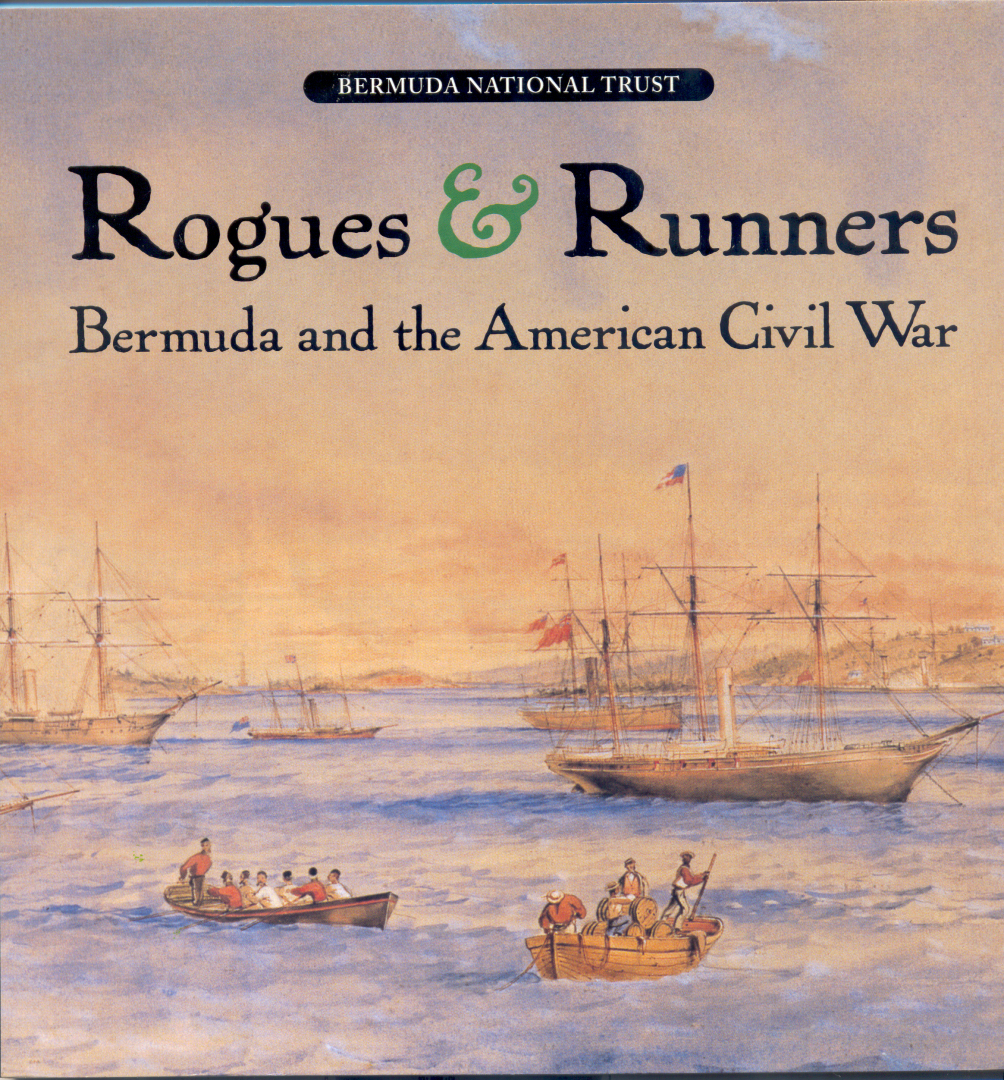
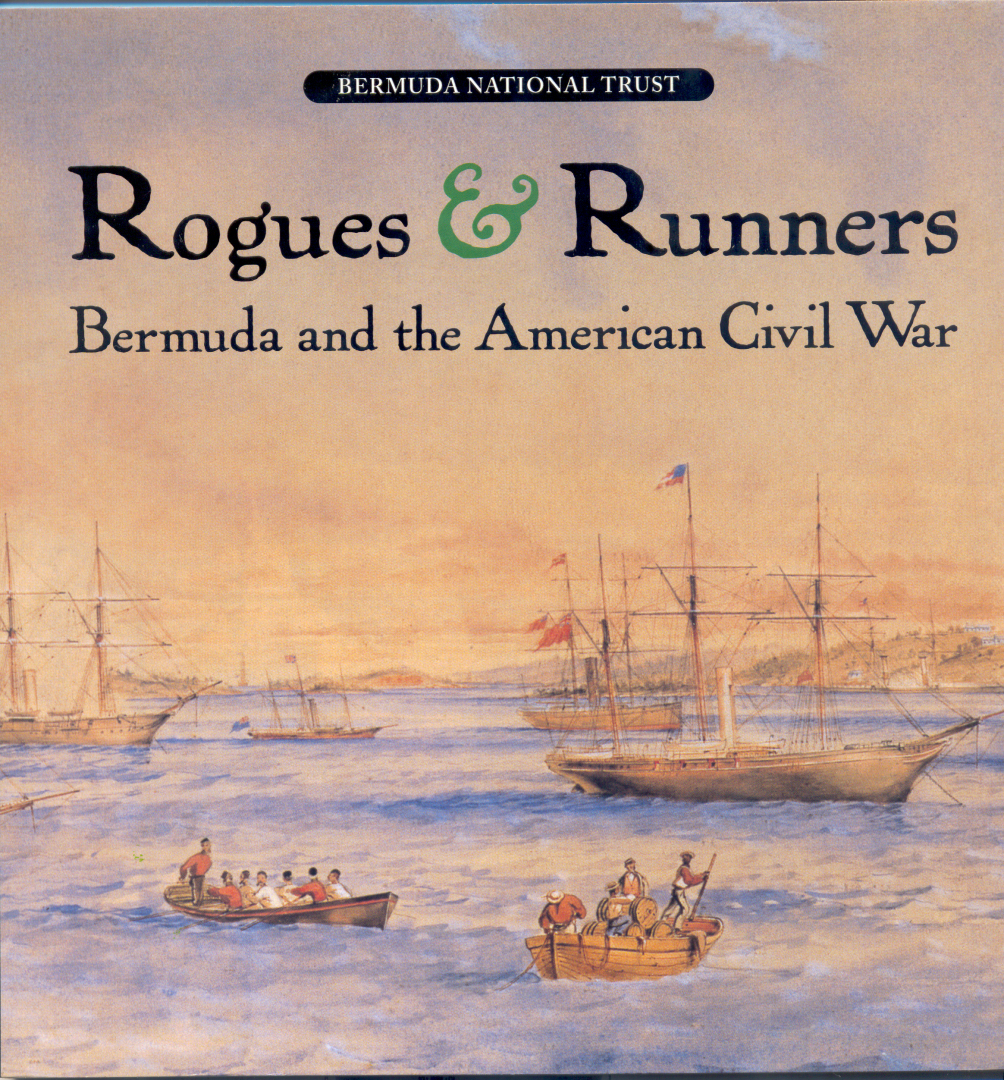 This colourful and information-packed book is based on the exhibit of the same title at the Globe Museums in St. George’s. The publication includes a range of historic images, from Edward James’ paintings to photographs of the men who led the blockade running.

 The Rich Papers are a major source of original letters and documents on Bermuda’s early history. Written principally to Sir Nathaniel Rich, a major shareholder in the Bermuda Company founded in 1612, they provide revealing eyewitness accounts of the early days of Bermuda, ranging through topics as diverse as indentured servants and tenant farmers, drunkenness, letters from an outspoken clergyman, and problems between the local governor and the Company in London.